
The 48th Annual Meeting of the Cognitive Science Society, or CogSci 2026, was held this week in Rio de Janeiro, Brazil, bringing together researchers in artificial intelligence, linguistics, psychology, neuroscience, and philosophy. Below is a roundup of AI-related work from Princeton researchers showcased at the conference.
The full conference program is available here.
Oral Presentation:
An Experimental Method to Study Opinion Diffusion in Human-AI Hybrid Societies

Authors: Léna Gaubert, Rémi Devaux, Elif Çelen, Raja Marjieh, Diana Mangalagiu, Antoine Jardin, Nori Jacoby
Links: Paper
Oral Presentation:
Automated Discovery of Psychological Representations using Language Model Agents
Authors: Daniel Lima Braga, Raja Marjieh, Akshay Kumar Jagadish · Princeton University, Ilia Sucholutsky, Nori Jacoby, Brenden M. Lake, Tom Griffiths
Links: Abstract
Oral Presentation:
Human-like learning in reasoning models: behavioral and neuroimaging evidence
Authors: Csaba Botos, Sreejan Kumar, Austin Andrews, Laurence Hunt, Christopher Summerfield, Rui Ponte Costa, Josh Tenenbaum, Marcelo Gomes Mattar, Momchil Tomov
Links: Abstract
Oral Presentation:
Rational Teachers Should ‘Lie’ to Bounded Students

Authors: Huang Ham, Dilip Arumugam, Carlos Correa, Bonan Zhao, Tom Griffiths, Natalia Vélez
Link: Paper
Oral Presentation:
Similarity All The Way Up: Multilingual Generalization in LLMs Relies on Language-Level Similarity Structures
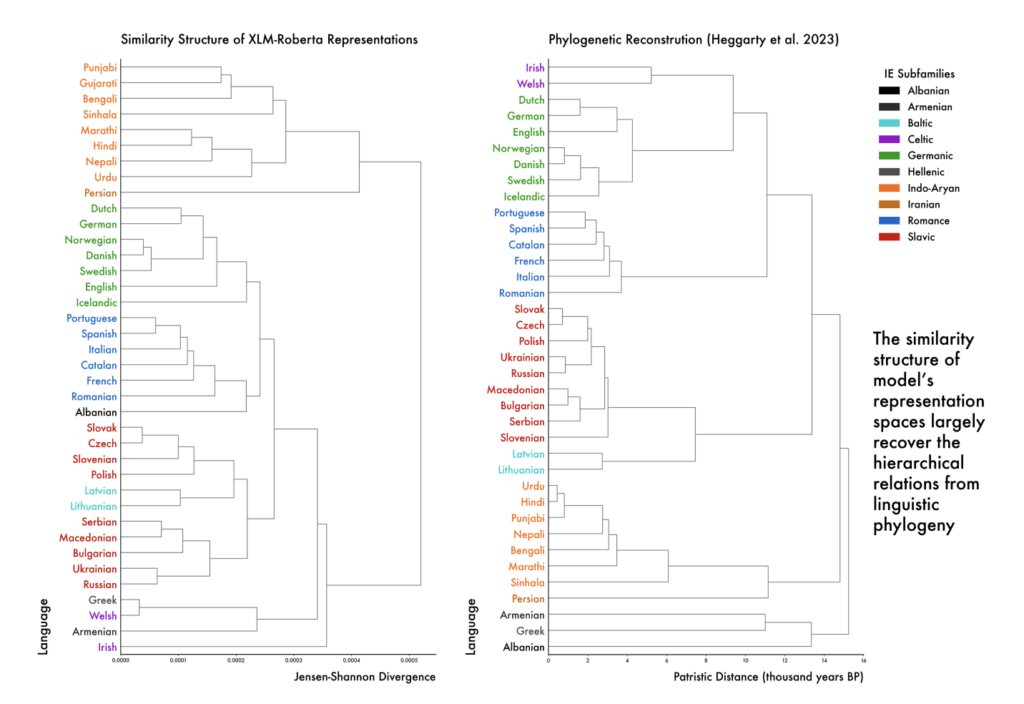
Authors: Supantho Rakshit, Adele Goldberg, Henry Conklin
Links: Project Website; Paper
Poster:
Interpretational alignment: How agents learn from physical guidance depends on how they interpret it
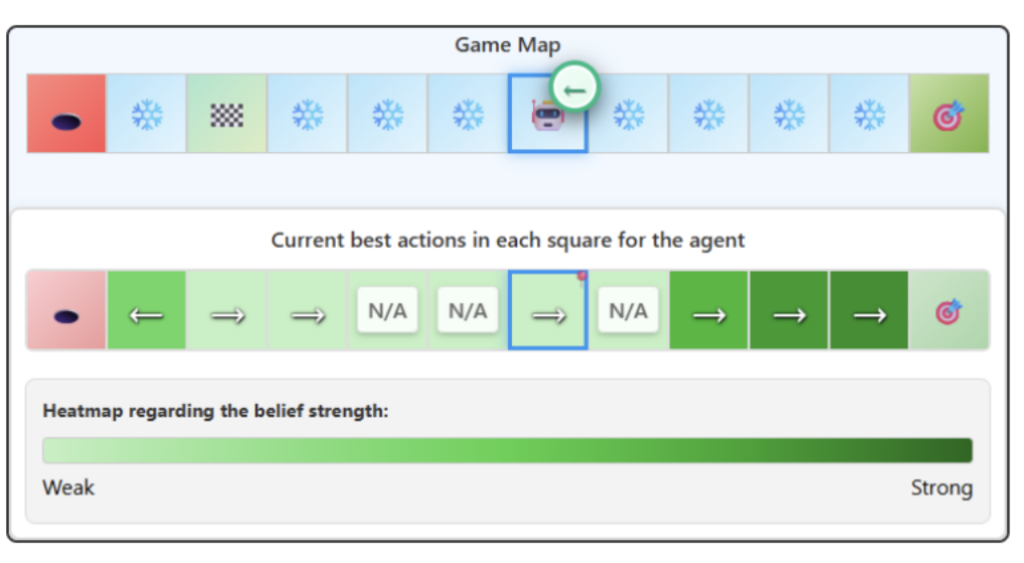
Authors: Zhuolun Zhong, Ben Prystawski, Sarah Wu, Bella Fascendini, Sepehr Saeedpour, Joseph Austerweil
Links: Paper
Poster:
Identifying Concepts Used by Human-Like Neural Network Chess Engines
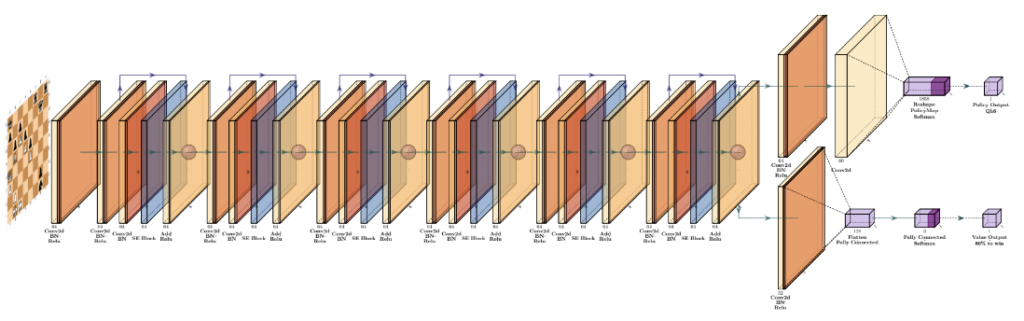
Authors: Issac Li, Evan Russek, Ionatan Kuperwajs, Tom Griffiths
Links: Paper
Poster:
Signatures of discrete action symbols emerge in a task-optimized neural model
Authors: Carlos Correa, Lucas Tian, Yue Liu, Sreejan Kumar, Daniel J. Hanuska, Kedar Garzón Gupta, Xiao-Jing Wang, Winrich A. Freiwald, Josh Tenenbaum, Marcelo Gomes Mattar
Links: Abstract
Poster:
An Episodic Memory Model Can Account for Reinforcement Learning in Humans
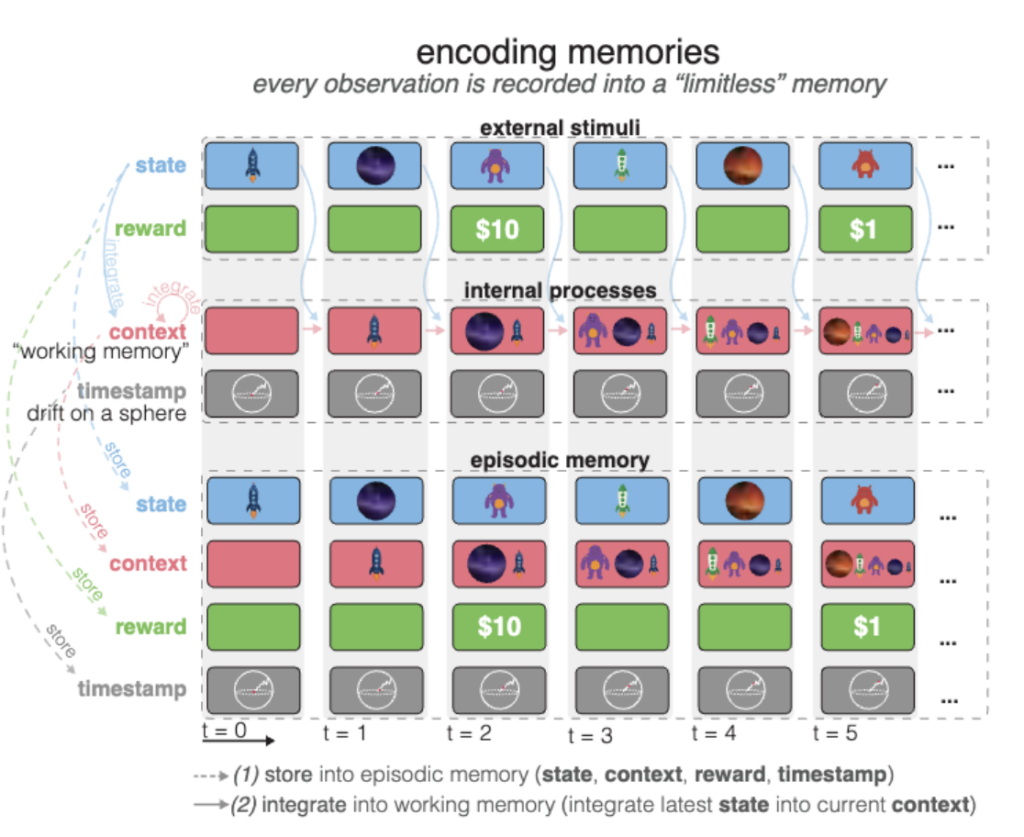
Authors: Javier Masis, Younes Strittmatter, Jon Cohen
Links: Paper
Poster:
Comparing LLM and Human Responses to Human- and AI-labeled Partners During Naturalistic Conversation
Authors: Rachel Metzgar, Michael Graziano
Links: Paper
Poster:
Online library learning in human visual puzzle solving

Authors: Pinzhe Zhao, Emanuele Sansone, Marta Kryven, Bonan Zhao
Links: Paper
Poster:
Representational Similarity and Context Inference as a Shared Computational Account for False Memories in Humans
Authors: Mohan Gupta, Caleb Kha-Uong, Jordan Taylor, Jon Cohen
Links: Abstract
Poster:
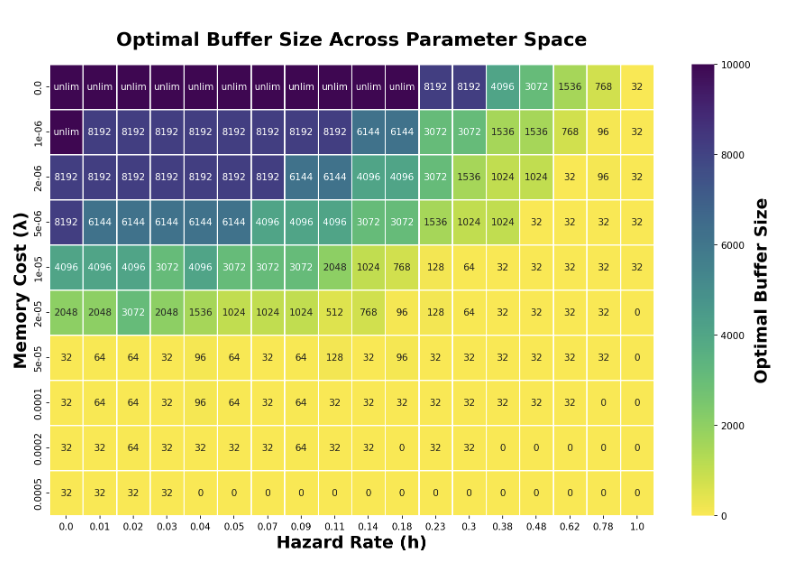
A Resource-Rational Analysis of Forgetting in Continual Learning
Authors: Shirley Yu, Alexander Ku, Tom Griffiths
Links: Paper
Poster:
Recovering Event Probabilities from Large Language Model Embeddings via Axiomatic Constraints
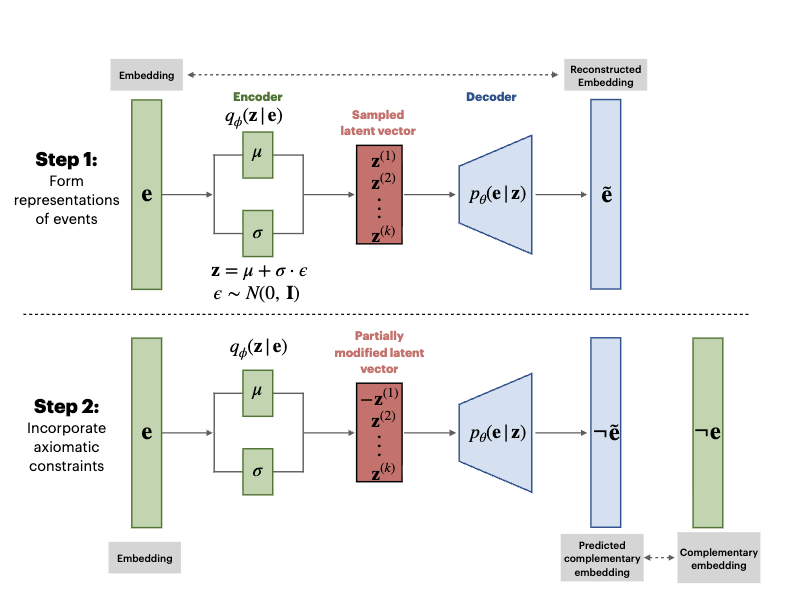
Authors: Jian-Qiao Zhu, Haijiang Yan, Tom Griffiths
Links: Paper
Poster:
Modeling individual differences in learning and memory using large language models
Authors: Akshay Kumar Jagadish, Milena Rmus, Marvin Mathony, Eric Schulz
Links: Abstract
Poster:
Evolutionary Theory Makes Predictions About Cognition Beyond Rational Optimization
Author: Cameron Turner, Tom Griffiths
Links: Abstract
Poster:
Meta-Learning Captures Human-Like Geometric Sensitivity
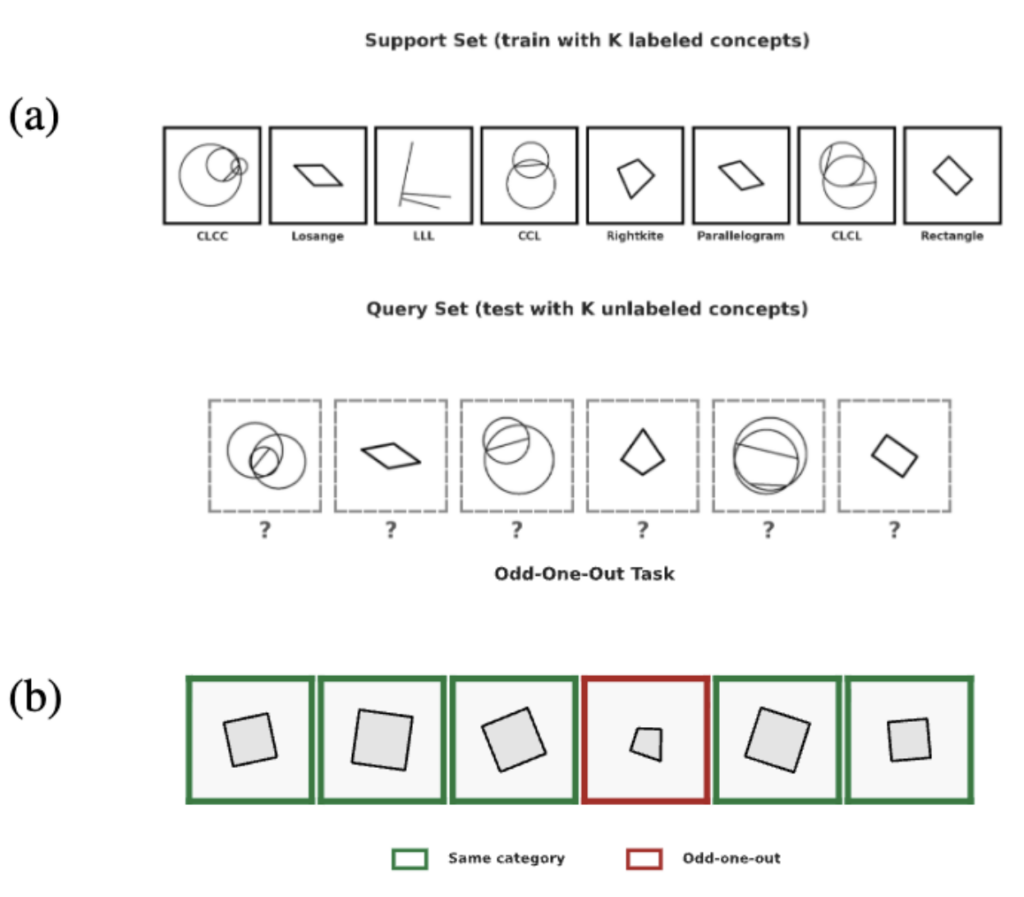
Authors: Max Gupta, Declan Campbell, Tom Griffiths
Links: Paper
Poster:
Modeling Context-Sensitive Effects of Inequity on Reinforcement Learning
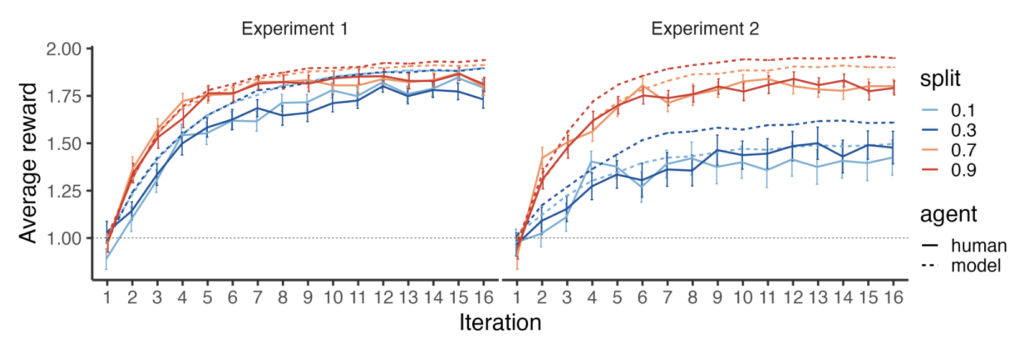
Authors: Huang Ham, Mu-Chen Wang, Joseph Kable, Adrianna Jenkins
Links: Paper
Poster:
Human-AI Synergy Supports Collective Creative Search

Authors: Chenyi Li, Raja Marjieh, Haoyu Hu, Mark Steyvers, Katherine Collins, Ilia Sucholutsky, Nori Jacoby
Links: Paper
Poster:
Steering Risk Preferences in Large Language Models by Aligning Behavioral and Neural Representations
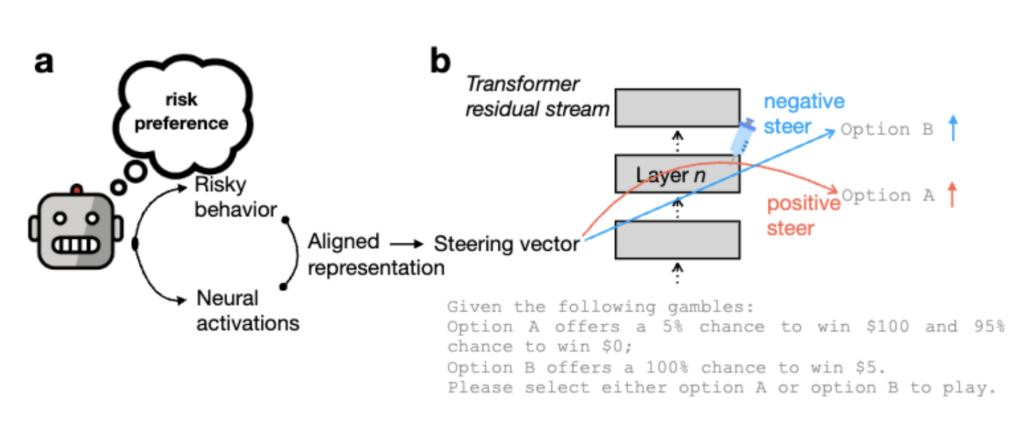
Authors: Jian-Qiao Zhu, Haijiang Yan, Tom Griffiths
Links: Paper
Poster:
Serendipity by Design: Evaluating the Impact of Cross-domain Mappings on Human and LLM Creativity

Authors: Qiawen Liu, Marina Dubova, Henry Conklin, Takumi Harada, Tom Griffiths
Link: Paper
Poster:
Pipeline for Systematic Curation of Human Experiments
Authors: Younes Strittmatter, Tom Griffiths, Akshay Kumar Jagadish
Links: Abstract
Poster:
Joint Modeling of Choices and Response Times in Multi-stage Decisions via Likelihood Approximation
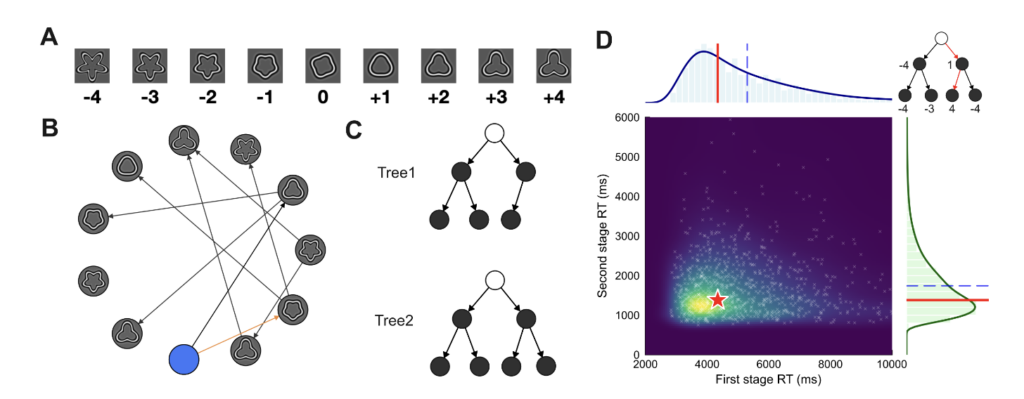
Authors: Jialin Li, Carlos Correa, Doris Yu, Prakhar Godara, Marcelo Gomes Mattar
Links: Paper
Poster:
A Rational Analysis of the Effects of Sycophantic AI

Authors: Rafael Batista, Tom Griffiths
Links: Paper
Poster:
Are they human? Detecting large language models by probing human memory constraints

Authors: Simon Schug, Brenden M. Lake
Links: Paper
Poster:
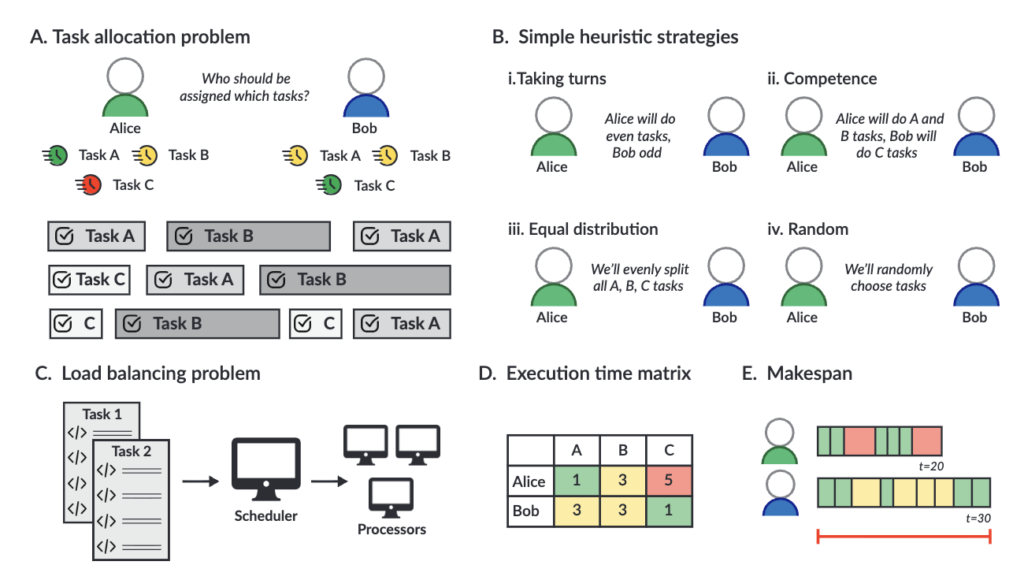
People Intuitively Schedule Tasks to Improve Collective Efficiency
Authors: Elizabeth Mieczkowski, Cheryl Li, Natalia Vélez, Tom Griffiths
Links: Paper
Poster:
Do Large Language Models Resolve Fairness-Efficiency Trade-offs Like People?
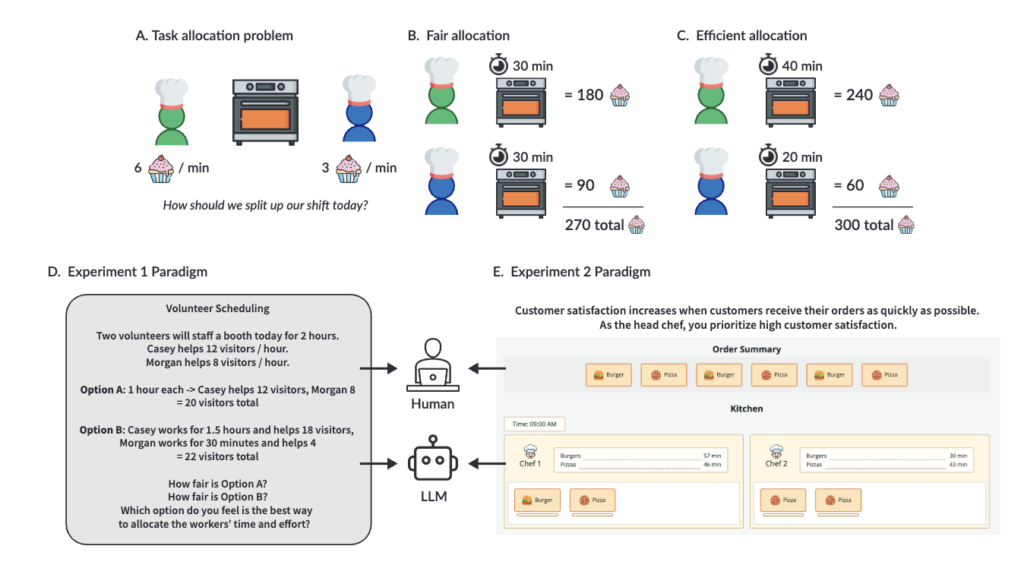
Authors: Cheryl Li, Elizabeth Mieczkowski, Veronica Valera, Natalia Vélez, Tom Griffiths
Links: Paper
Poster:
When Topology Matters: Perturbative Analysis of Nonlinear Social Learning on Networks
Authors: Burak Aydin, Raja Marjieh, Tom Griffiths
Links: Abstract
Poster:
Parallelograms Strike Back: LLMs Generate Better Analogies than People

Authors: Qiawen Liu, Raja Marjieh, Jian-Qiao Zhu, Adele Goldberg, Tom Griffiths
Links: Paper
Poster:
How The Bias-Variance Tradeoff Shapes Human Strategy Selection

Authors: Maximilian Maier, Falk Lieder, Tom Griffiths
Links: Paper
Leave a Reply